How to Use the 50/30/20 Budget Rule (With an Example)
Split your income into needs, wants and savings with the 50/30/20 rule. See a worked example and how to adjust it for your situation.

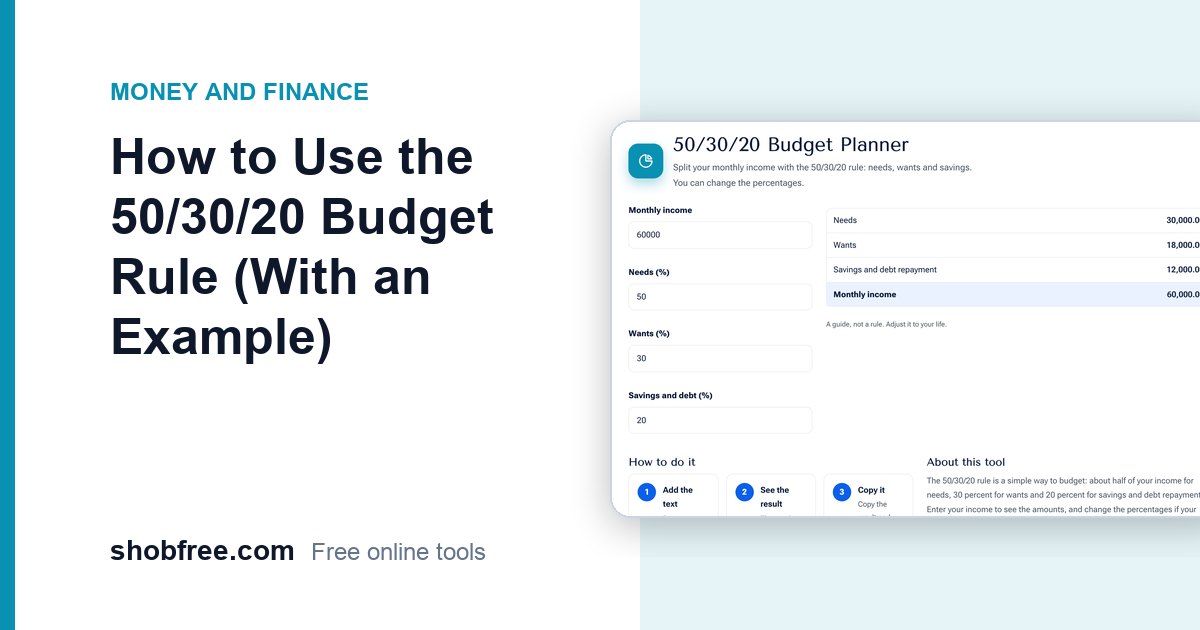
The 50/30/20 rule is a simple budget: 50 percent of your income for needs, 30 percent for wants and 20 percent for savings and debt. The free 50/30/20 Budget Planner does the split for you.
Quick answer
Enter your monthly income after tax. The planner shows how much to give to needs, wants and savings.
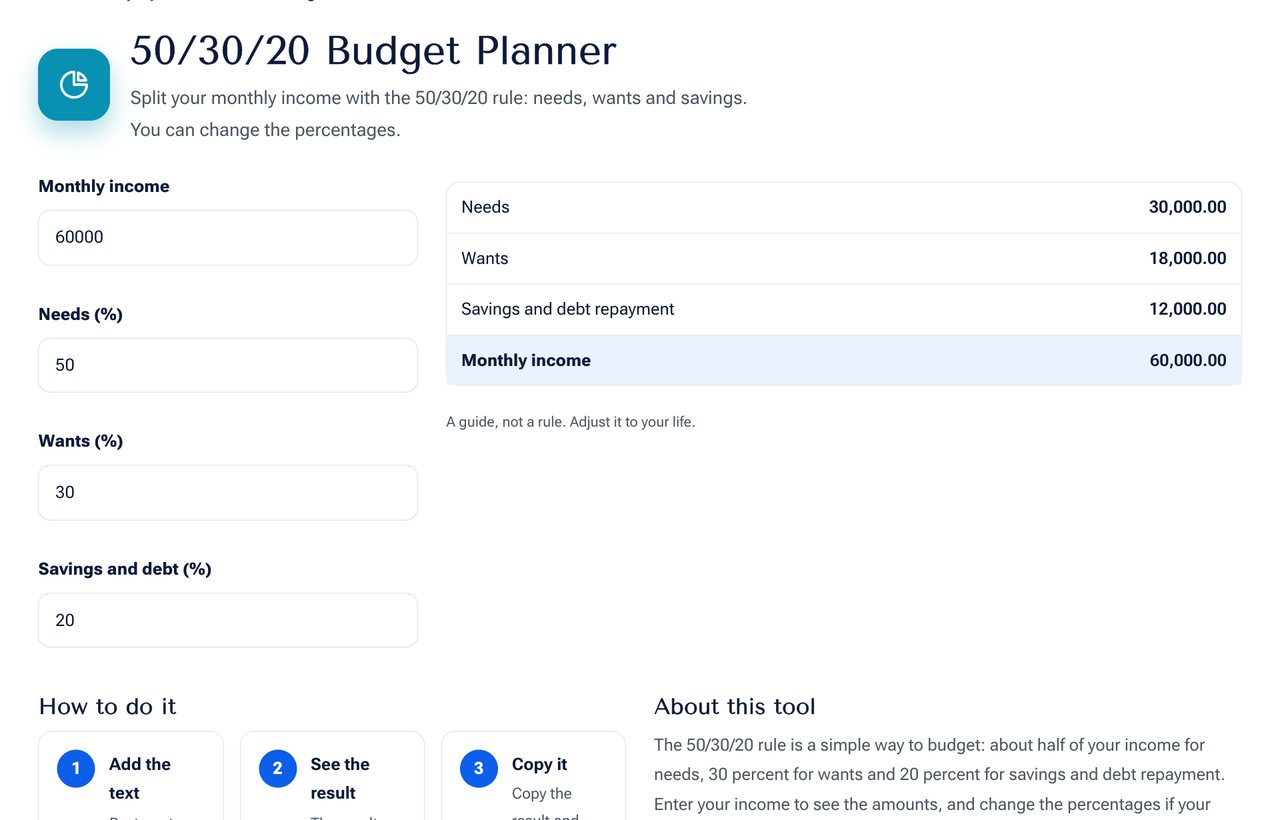 The 50/30/20 Budget Planner tool on shobfree.com, ready to use in your browser.
A worked example
If you take home 40,000 taka a month:
- Needs, 20,000: rent, food, transport, bills, minimum loan payments.
- Wants, 12,000: eating out, clothes, subscriptions, entertainment.
- Savings, 8,000: emergency fund, investments, extra loan repayment.
What counts as a need
A need is something you must pay to live and work: housing, basic food, utilities, transport to work, insurance and the minimum due on debts. A bigger phone plan or a new phone is usually a want.
Adjusting the rule
The rule is a starting point.
- In a high-rent city, needs may take 60 percent. Reduce wants first, not savings.
- If you have debt with high interest, move some wants into repayment.
- If your income is low, begin with 5 or 10 percent savings and raise it slowly.
How to make it work
- Track spending for one month to see where money goes.
- Set up the savings transfer on payday.
- Use a separate account or envelope for wants.
- Review every three months.
Starting with an emergency fund
The first job of the 20 percent is a buffer of three to six months of essential expenses. In the example, needs are 20,000 a month, so the target is 60,000 to 1,20,000. Keep it somewhere safe and easy to reach. Only after that should you put the savings into longer-term investments.
Making wants feel good
A budget works better when wants are planned, not banned. Give yourself a fixed amount for eating out and entertainment and enjoy it without guilt. When the amount is gone, wait for next month. This is easier to keep than strict rules that you break after two weeks.
Example for a family with two incomes
A household takes home 60,000 a month. Needs at 50 percent are 30,000, but rent, food and school fees come to 38,000. That is 63 percent. The family adjusts to 63/17/20: they keep savings at 20 percent, reduce wants from 30 to 17 percent, and review rent when the lease ends. The rule did not fail; it showed where the pressure is.
Tools that help
Track spending for a month with a notebook or a simple sheet. Group each expense under need, want or saving. Many people discover that "small" wants such as snacks, mobile data and delivery fees add up to a surprising share.
Sources and further reading
- The rule was popularised by Senator Elizabeth Warren and Amelia Warren Tyagi in the book "All Your Worth".
Frequently asked questions
Should I use gross or net income? Use the amount you actually receive.
What if my income changes every month? Use your lowest typical month as the base and treat extra income as savings.
Does paying off debt count as a need or as savings? The minimum payment is a need. Anything extra you pay counts towards the 20 percent.
Next step
Try your income in the 50/30/20 Budget Planner. Then see how a monthly saving grows with the SIP Calculator.