How to Calculate Your Net Worth (and Why You Should Track It)
Learn what net worth means, how to add up assets and debts, what a healthy debt ratio looks like and how to grow the number year after year.

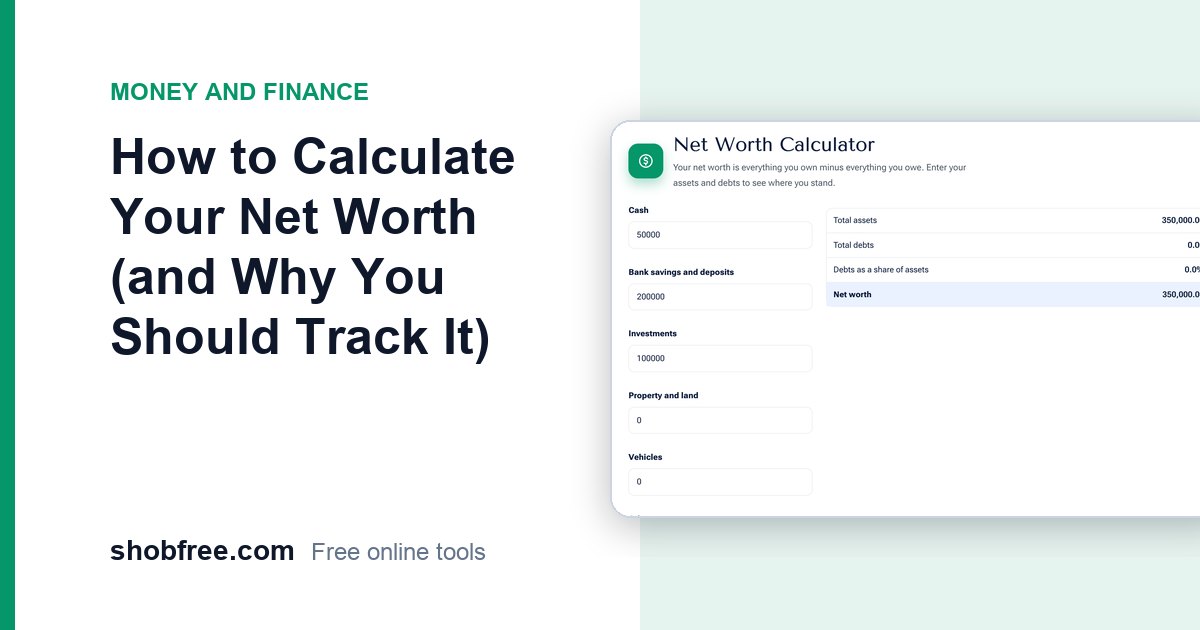
Income tells you what you earn. Net worth tells you what you keep. It is the single clearest number for judging your financial health over time, and it takes ten minutes to work out. The free Net Worth Calculator adds up your assets and debts and shows the difference.
Quick answer
Net worth = everything you own minus everything you owe. If you have 3,50,000 taka in cash, savings and investments and no debts, your net worth is 3,50,000. If you also owe 1,00,000 on a loan, it is 2,50,000.
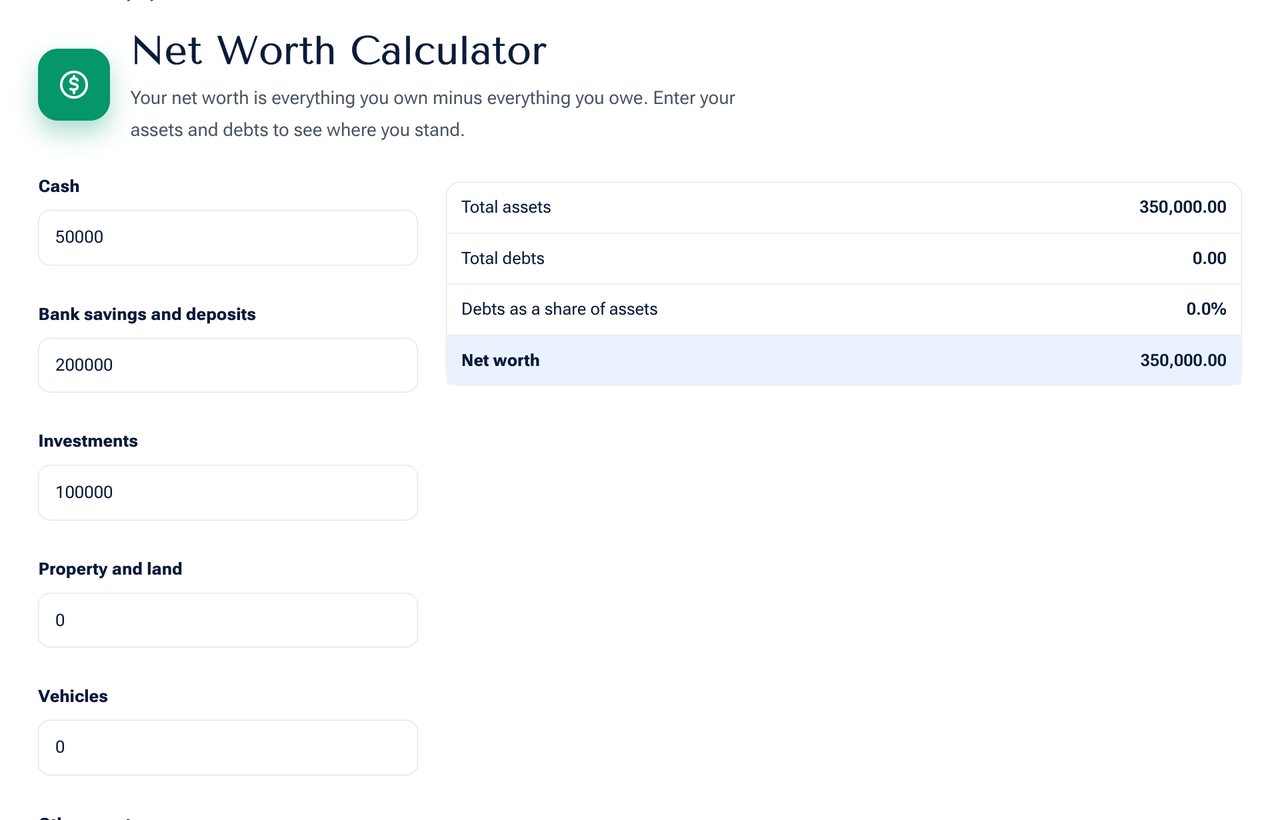 The Net Worth Calculator showing total assets, total liabilities, the debt ratio and net worth.
What counts as an asset
- Cash and bank balances, including mobile wallets.
- Savings and deposits, such as FDR, DPS and savings certificates.
- Investments, such as shares, mutual funds, bonds and gold at current market value.
- Property, valued at what it would sell for, not what you paid.
- Vehicles, valued at their current resale price, which falls every year.
- Other assets, such as business ownership, money owed to you and valuable items that you could sell.
What counts as a liability
Home loans, car loans, personal loans, credit card balances, money owed to family or friends, unpaid taxes and any other debt you must repay. Use the amount outstanding today, not the original loan.
Worked example
| Assets | Taka | Liabilities | Taka |
|---|---|---|---|
| Cash | 50,000 | Car loan | 4,00,000 |
| Savings | 2,00,000 | Credit card | 30,000 |
| Investments | 1,00,000 | ||
| Car (resale value) | 6,00,000 | ||
| Total | 9,50,000 | Total | 4,30,000 |
Net worth: 9,50,000 minus 4,30,000 equals 5,20,000. The debt ratio, which is liabilities divided by assets, is about 45 percent.
How to read the debt ratio
A debt ratio under 30 percent is comfortable for most households. Between 30 and 50 percent is common while paying off a home or car. Above 60 percent means most of what you own is financed, and a drop in income or in asset prices could hurt. A negative net worth is common for young people with education loans, and the aim is simply to move it upward.
How to use the number
- Calculate it once a year, on the same date, with the same method.
- Do not mix the personal and the business. Track them separately unless the business is a sole proprietorship.
- Be honest about valuations. Use realistic resale values for vehicles and property.
- Watch the trend, not one reading. A rising net worth means you are building wealth even if income is flat.
Ways to grow it
- Pay down high-interest debt first. A card at 20 percent costs more than any savings account earns.
- Save a fixed share of every income, as in the 50/30/20 budget rule.
- Invest regularly for the long term, within your risk level.
- Avoid assets that lose value quickly unless you really need them.
Frequently asked questions
Should I include my home? Yes, at its market value, and include the home loan as a liability. Some people also track net worth excluding the home to see their liquid position.
Is a negative net worth bad? Not necessarily. It is a starting point. Students and new borrowers often start there.
How is it different from income? Income is what comes in each month. Net worth is the stock of what you have built.
Does it include future earnings? No. Only what you own and owe today.
Next step
Fill in the Net Worth Calculator with today's figures and save the result with the date. Then plan the next step with the Savings Goal Calculator.